
About this
- Original Post Date: May 23, 2017
CIO Magazine was a leading international publication focused on technology leadership, digital strategy, and the evolving role of Chief Information Officers. Founded in 1987 by IDG, its print edition was discontinued in 2015 as the brand transitioned to a fully digital presence through CIO.com and events.
Frances Valintine, founder of Tech Futures Lab and chair of The Mind Lab at Unitec, says a number of women who ended up in technology did not start in technology.
“They went zigzagging, moving and pivoting, it is not a natural pathway,” says Valintine.
“You can not be what you can not see,” she says. “When the board is 90 per cent male, who wants to be the ‘token imposter’”?
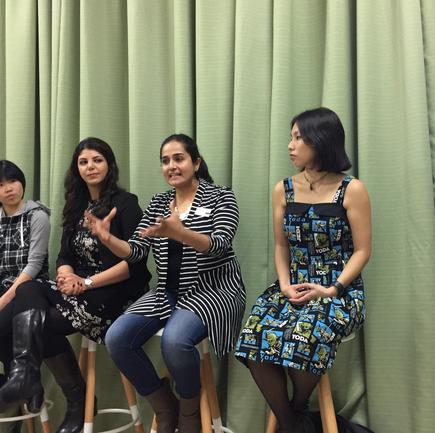
This is the reason why it is important for organisations to bring women to all parts of the business, says Valintine, speaking at the panel ‘Breaking stereotypes – an insider view of women in tech’.
The forum, which was held as part of NZTech Week, brought together a panel of female ICT professionals, all at different points in their careers, to talk about how they are making a dent in the male-dominated industry.
We should encourage other women to bash through the glass ceiling
Frances Valintine
Joining Valintine in the panel were:
- Alex Garkavenko, data architect, Dexibit
- Nitkalya Wiriyanuparb (Ing), software engineer, Orion Health
- Mahsa Mohaghegh, She# founder/ lecturer, School of Engineering, Computer and Mathematical Sciences, Auckland University of Technology
- Priti Ambani, co-founder/COO, The Next Billion; and
- Vivian Chandra, tech strategist and independent IT consultant.
Most of the participants in the panel followed a non-linear path to their chosen careers. But all of them are now making a dent in the traditionally male-dominated ICT sector.
‘Keep learning’
The hardest thing to do is find women to put themselves forward as role models, says Valintine, as she lauds the work the panel members were doing to promote both ICT as a career and diversity in the sector.
It is critical for women and other under-represented people in the sector to get over the ‘imposter syndrome, she says.
The term refers to high-achieving people who experience self-doubt about their skills and fear being exposed as a fraud.
“We are not imposters. We have every right to be there,” she says.
“We should encourage other women to bash through the glass ceiling,” says Valintine, who is also the 2017 Flying Kiwi awardee.
Valintine says her childhood upbringing had a big influence on her views around work.
“My father was a feminist,” says Valintine. “I was never told I could not do something. You could do anything you wanted.”
She proved this when she was growing up in a farm and learned how to do all the work, including chopping wood.
She cites the importance of knowing what are the roles going forward and making sure children are encouraged towards these roles.
A challenge is how to get children excited in technology and how to make technology accessible to them, she says.
She tells the audience each one of them can make a difference even in one young woman’s life.
Valintine is involved in First Foundation, which provides scholarship and mentoring to students from low decile schools.
She is currently working with a student who will be the first child in her family to go to university, and who wants to work in technology.
“If you have an ability to influence girls in high school, do so,” she says. “You can give them work experience, or ring your friends who may be able to provide them that exposure to the industry.
“If not, they are going to be left behind.”
Valintine says the male executives also play a part in the goal for diversity in the sector. She claims there are now male executives who do not want to speak in a conference if there is only one woman speaker and the 15 others are male.
She also advises to “find your tribe”, “a group of people who “have got your back no matter what”.
They may be people in your social life, in your neighbourhood or at work.
She has a group of other women professionals who she met in functions. “We had similar ambitions for what we want, with a New Zealand vision for our children.”
Valintine says a number of large businesses are facing challenges, resulting in massive redundancies.
“Only sectors built on a technology platform or a startup are scaling,” she observes.
Continuing education is critical for success in the ever-changing ICT sector. She says there are now thousands of free courses online, from data science to machine learning.
“We have to keep learning, our brain loves to learn,” says Valintine. “We learn from the past. But clearly, we should have floodlights into the future.”
“You are the person who carries you forward. You have to look into the future. If we don’t … the next generation will be further held back.”
“Stay curious,” she says. “Ask, what can I learn today?”
‘Make a difference’
Another panellist, Vivian Chandra, says it is also important to look at all kinds of diversity.
She echoes the sentiments of other women in the panel, who say they need to involve the men to help break gender stereotypes.
She cites the case of her husband, who gets comments from people when they see him taking care of their two children. When people say he is babysitting, he corrects them with this: “I am not babysitting, I am parenting.”
Chandra has a degree in physics and has completed her master’s degree in sociology, where her dissertation was on ‘everyday sexism within an Aotearoa context’.
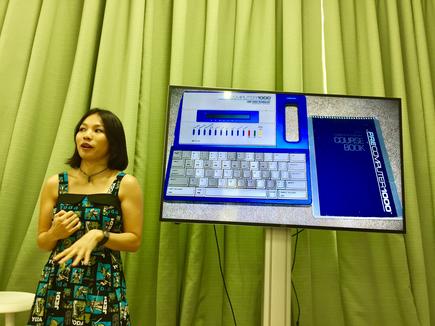
Chandra recalls that when she was nine, her father, an accountant, bought her a computer.
That led to her interest in computers, which she was able to combine with her social activism.
She worked for nearly 10 years as ICT manager at Amnesty International in New Zealand, and is now an independent technology strategy consultant.
She quotes Alice Walker: “Activism is my rent for living on the planet.”
You can make a difference, even with one person, she says.
Her first job was as a computer technology staff member in a high school. During her tenure she organised a code club and years later she met one of its members, who remembered how she introduced her to IT through that club.
Today, she is a volunteer for OMGTech! that holds workshops for children aged eight to 12, to introduce them to future technologies.
She says the events provide opportunities for the children, but also show the contrasting situations of the attendees, as they come from both low decile and high decile schools.
Her son, aged 9, who joins her in the workshops, once helped a 14-year-old student who had never touched a computer.
One of her best experiences was talking to a child after one such workshop.
The child said his father is a bus driver and thought that was what he was going to do in the future. But at one of the workshops, he learned in the future, people may be riding driverless buses. He now wants to be a robotics engineer.