This past weekend I joined over a hundred other like-minded people and disconnected. Early on Friday afternoon, I took my smart watch off, and switched it off, and did the same to my phone. I stowed both safely away in my bag and shook out my sleeping bag, arranging it neatly on the small bunk bed, on top of the plastic camp mattress.
In doing so, I re-connected and forged new connections.
I met with friends that I haven’t seen since last year (this camp is based in Ōtaki, and I live in Tāmaki Makaurau – thanks, as always to Wellington Seido Karate club for hosting).
I met new people, and based on our mutual interest of karate, got to know them as new friends.
I’ve been going to one or two (or more) of these annually for at least the last decade of my life. I started karate as an awkward teenager, and when the pressures of university and life got too much, I gave it up.
Looking back, it remains a source of regret that I gave up such a huge part of my life, and also that I didn’t understand the lessons martial arts was teaching me, beyond the physical.
I returned to karate as an adult, just after I had my first child. Society was telling me to “lose the baby weight” and the gym membership had been languishing on my key chain for over a year. I found that even though I had been away for eight years, all the muscle memory kicked in, and I felt like I’d returned home.
The rest of this blog goes over concepts and learnings I’ve gleaned from Kaicho Tadashi Nakamura’s (our founder) meditation lectures.
OSU
This word is one of contention amongst different styles of karate. My style, called Seido Karate, uses it a LOT.
Osu is a Japanese word, shortened from Oshi Shinobu

In short, it means Keep Patience.
Within the dojo, we use it as a greeting, or a way to recognise that “I am here. I try hard, I respect (you and myself), and I won’t give up” – yep, all in one phrase.
We use it to acknowledge a senior when we pass them – not as an act of subservience, but as recognition of their knowledge, ability and dedication.
We also use it to reaffirms our commitment to train hard and improve. Especially on the days we feel that we have no patience.
I try to live this value in all aspects of my life, if something is testing my patience or my resilience, I quietly breathe out and say Osu in my head. It centers me and it reminds me that everyone has their own struggles and what you see on the outside might not be the entire story.
Omoiyari
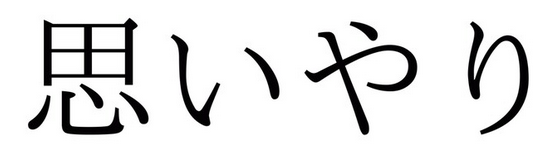
Omoiyari means “take time to really care about others”, or sometimes it is translated as “sincere thoughtfulness”. In a world where “be kind” as a concept has been lost, omoiyari reminds us if we all care for each other and take care of each other, then maybe we’ll all make it through.
I like the word “sincere” when this phrase is translated. Let’s consider the POV where you’ve done something for someone, and the other person doesn’t even thank you. If your first reaction is “WTAF, they should have at least thanked me!”, then you do not have omoiyari, and I really think that a lot of what happens in the world is this quid pro quo way of gratitude. We do things to build ourselves up: “look at me, I know how to do this, and they do not” – so we expect gratitude.
A sincere form of caring means we expect nothing in return.
fu gen jikko

Fu Gen Jikko means “let your actions speak for you”. Let your actions be the embodiment of your feelings and intentions. It’s fine to use words to keep ourselves accountable, but if you don’t follow through, then the announcements are empty.
In our society, it is hard to live like this. We often have all the best intentions and then things take over and we make excuses. I’m the most guilty of this and have had to try to figure out methods which help me to follow through. It’s a work in progress and I hope that one day I’ll crack it!
there are so many more
There are so many more concepts that I have learnt over the years. This is the main difference between a traditional style and a modern interpretation… we have hundreds of years of history and meditative practice to fall back on.
Anyone can teach you how to punch and kick, but only with oshi shinobu do you get together with over a hundred other karateka and do 1000 of them.
Come join me, our style has branches all over the world, and if you’re near central Tāmaki Makaurau (Auckland), i’m happy to come to a beginner class with you. The first step is always the hardest, and I would love to take it with you.
 Vivian Chandra